Natural Black-textured hair is expressive, versatile, and beautifully complex. From tight coils and springy curls to soft kinks and dense strands, this hair type has a wide range of patterns and personalities. But one thing remains true across the spectrum: it thrives with moisture, patience, and consistency.
Unlike straighter hair textures, natural Black hair often has bends and coils that make it harder for the scalp’s natural oils to travel down the full length of the strand. This means the hair can become dry more easily, especially at the ends. Proper care is not about “taming” the hair. It is about learning its rhythm, protecting its strength, and supporting its natural beauty.
Start With Moisture, Not Manipulation
The foundation of healthy, natural hair is moisture. Black-textured hair tends to need more hydration because its structure can make it more vulnerable to dryness. A good routine usually begins with water-based moisture, followed by products that help keep that moisture in.
A leave-in conditioner is often one of the most useful products in a natural hair routine. It softens the hair, improves manageability, and helps reduce breakage during styling. Creams and butters can add richness, while oils can help seal in hydration. Oils do not truly moisturize hair on their own, but they can help slow moisture loss when used after a water-based product.
A simple order to remember is: hydrate first, then seal. Think of water or leave-in conditioner as the drink, and oil or butter as the protective layer that helps the hair hold onto it.
Cleanse Without Stripping
Clean hair is healthy hair, but natural hair does not always need harsh cleansing. Shampoos that are too drying can strip the scalp and strands of necessary oils, leaving the hair brittle or rough. A gentle, sulfate-free shampoo is often a good choice for regular wash days.
How often you wash depends on your lifestyle, scalp, styling habits, and product use. Someone who works out often or uses heavier creams may need to cleanse more frequently than someone who wears low-product protective styles. The goal is not to follow a strict rule, but to pay attention to how your scalp and hair feel.
If the scalp is itchy, flaky, or weighed down, it may be time to wash. If the hair feels dry but not dirty, it may simply need moisture rather than shampoo.
Deep Conditioning Is a Non-Negotiable
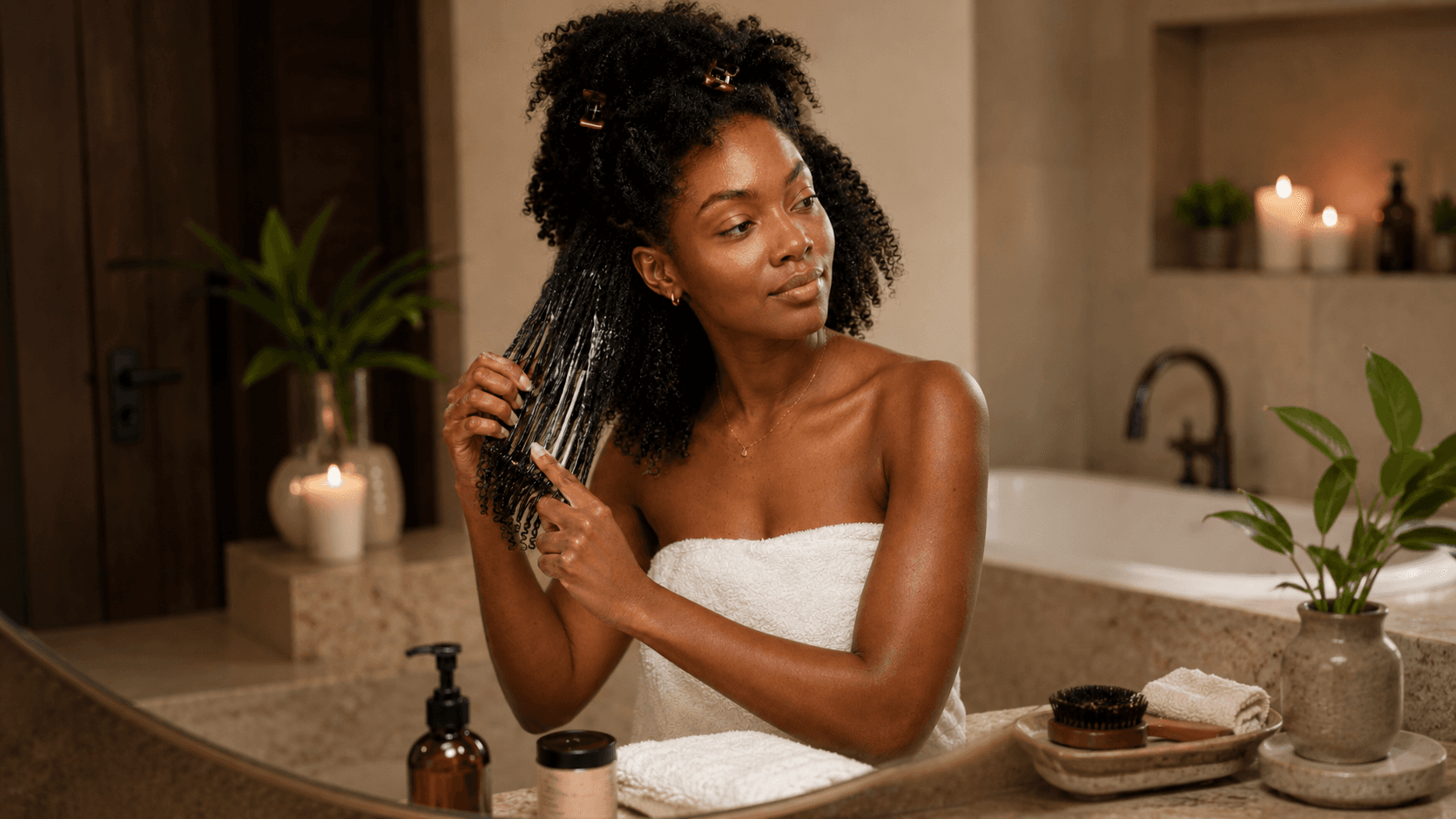
Deep conditioning is one of the best ways to support natural Black-textured hair. It helps soften the strands, improve elasticity, and make detangling easier. Elasticity matters because healthy hair should be able to stretch slightly and return to its original shape without snapping.
A weekly or biweekly deep conditioning treatment can make a noticeable difference, especially for hair that is color-treated, heat-styled, or frequently manipulated. For added benefit, you can use gentle heat from a hooded dryer, a steamer, or a warm towel. Heat helps open the hair cuticle slightly, allowing the conditioner to work more effectively.
Detangle With Care
Detangling is where a lot of breakage can happen, so it deserves patience. Natural hair should usually be detangled while damp, using conditioner or a detangling product that provides slip. “Slip” means the product helps the strands glide past each other instead of catching and snapping.
Use your fingers first to separate knots gently, then follow up with a wide-tooth comb or detangling brush if needed. Always work from the ends upward toward the roots. Starting at the roots can push tangles downward, creating larger knots.
Small sections are your friend. The thicker or tighter the hair texture, the more useful sectioning becomes.
Protect the Ends
The ends of the hair are the oldest and most fragile part of each strand. They have been through the most washing, styling, rubbing, and exposure. If you want length retention, protecting the ends is essential.
Protective styles such as twists, braids, buns, flat twists, and updos can help reduce daily manipulation. However, a style is only truly protective if it is not too tight, too heavy, or left in for too long. Tension around the edges or scalp can lead to breakage and thinning over time.
Low-maintenance does mean no maintenance. Even in protective styles, the scalp may need cleansing, and the hair may still need light moisture.
Be Thoughtful With Heat
Heat can be used safely, but it should be used with intention. Blow dryers, flat irons, and curling tools can weaken the hair if used too often or at very high temperatures. Always use a heat protectant before applying direct heat.
If you want to stretch your hair without excessive heat, consider banding, African threading, twist-outs, braid-outs, roller sets, or using a blow dryer on a low or medium setting with a comb attachment. These methods can help reduce shrinkage while being gentler on the hair.
Shrinkage is not damage. It is often a sign of elasticity and a healthy curl pattern. The goal is not to eliminate shrinkage, but to manage it in ways that suit your styling needs.
Build a Night Routine
Night care can make or break a natural hair routine. Cotton pillowcases can absorb moisture and create friction, leading to dryness and frizz. A satin or silk bonnet, scarf, or pillowcase helps reduce friction and preserve moisture.
For loose styles, consider putting the hair into large twists, braids, or a pineapple before bed. This helps prevent tangling and keeps the style fresher for longer. In the morning, a light mist of water or leave-in spray can help revive the hair without fully restyling it.
Trim When Needed
Holding onto damaged ends can make the hair look thinner and feel harder to manage. Split ends do not repair themselves, and if ignored, they can travel up the hair shaft. Regular trims help maintain shape, reduce tangles, and support healthier-looking hair.
You do not need to trim on an extreme schedule, but you should watch for signs: rough ends, excessive knotting, uneven shape, or breakage that keeps returning. For many people, trimming every few months is enough, but the right timing depends on the condition of the hair.
Feed the Hair From the Inside Too
Hair care is not only about products. Hydration, nutrition, sleep, and stress all influence the condition of the hair and scalp. A balanced diet with enough protein, vitamins, minerals, and healthy fats supports the body’s ability to grow strong hair.
No product can fully compensate for internal imbalance, harsh styling, or chronic neglect. Healthy hair is built through both care and lifestyle.
Keep the Routine Simple and Consistent
A good natural hair routine does not need to be complicated. In fact, many people see better results when they stop chasing every new product and focus on consistency.
A strong routine can be as simple as:
Cleanse gently.
Condition deeply.
Moisturize regularly.
Detangle carefully.
Protect the ends.
Sleep with satin or silk.
Trim when needed.
Natural Black-textured hair does not need to be forced into submission. It needs to be understood. With the right balance of moisture, protection, and patience, it can be soft, strong, full, and beautifully expressive.
The best routine is not the most expensive one. It is the one your hair responds to, the one you can maintain, and the one that helps you feel confident in the texture that is naturally yours.